Introduction
I've always been obsessed with organization.
Back in high school, especially during my math specialization, staying organized wasn't optional. I tracked everything — study hours, notes, schedules. I needed structure to perform.
But every day, I was switching between tools: Google Calendar, Notion, Drive… and it broke my focus.
So I asked myself: what if everything was in one place?
MVP → v1 → v2 · Real feedback loops · 6+ months iteration
Learning by Building
At the same time, I was learning how to code.
Instead of doing tutorials endlessly, I made a decision: learn by building something real.
Azmam became my learning environment.
The MVP: Build Fast, Not Perfect
The goal was simple: a single dashboard for students to manage everything.
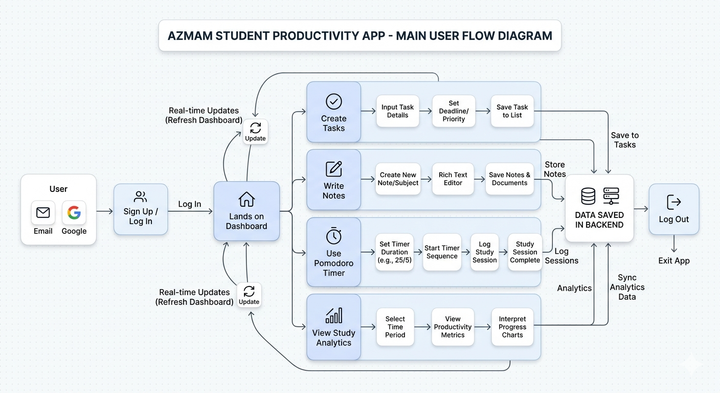
MVP Features
- Dashboard overview
- Pomodoro timer
- Study tracking (charts)
- Agenda
- Note-taking tool
Here's how users interact with the product on a daily basis:
It wasn't perfect. But that was intentional.
I set a deadline and shipped anyway.
Lesson: There's no value in building features nobody uses.
First Validation: Real Users
I didn't want biased feedback.
So I tested with people I didn't know and created a structured Google Form to guide feedback.
- Most used features
- Pain points
- Bugs
- User behavior
This gave me something most student projects don't have: real user data.
From MVP to v1: Building Like a Product
Instead of randomly adding features, I approached v1 like a real product.
- Created a product backlog
- Worked in sprints (Jira / GitHub Kanban)
- Prioritized based on user feedback
From: "What can I build?"
To: "What should I build next based on real usage?"
Growing the Product
After launching v1, users started coming through other users.
Engagement increased, and feedback became more detailed.
I ran another feedback loop focused on:
- Landing page clarity
- Product understanding
- First impression
The Turning Point
Even though the product worked…
Users didn't immediately understand the value.
That's not a technical issue — it's a product problem.
So instead of adding more features, I made a decision: simplify everything.
v2: Rebuilding for Clarity
Azmam v2 wasn't just an update.
It was a redesign focused on one goal: make the product instantly understandable.
- Simplified UX
- Clearer product identity
- Better onboarding
- More focused features
A clear product beats a powerful but confusing one.
Technical Decisions
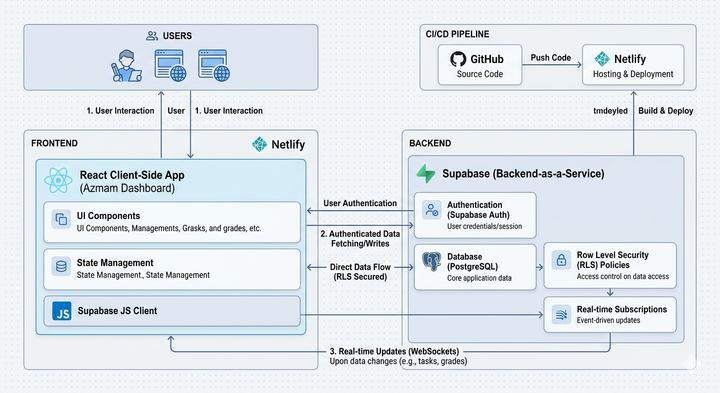
Why React + Supabase?
- Fast iteration
- Minimal backend setup
- Built-in authentication
- PostgreSQL + RLS security
- Real-time updates
Here's a simplified view of the system architecture behind Azmam:
Why not Next.js?
I knew I wouldn't scale immediately.
Using a heavier architecture too early would slow development.
Focus: strong foundations first, scaling later.
Builder Mindset
- Ship fast
- Learn from real users
- Iterate continuously
- Avoid unnecessary complexity
What I Learned
- Shipping > planning
- Simplicity wins
- Feedback loops are everything
- Building = product thinking + execution
What's Next
- Mobile version
- Smarter study insights
- Better onboarding
- Integrations
Final Takeaway
Azmam started as a simple idea.
But it taught me something bigger:
Building a real product isn't just about code. It's about solving problems, listening to users, and iterating constantly.